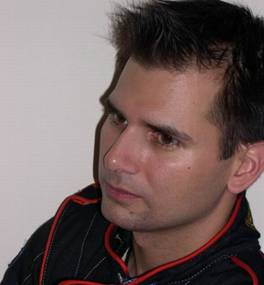
SHANGHAI INTERVIEW WITH PETE
OLSON
In the post race cool down of Peter Olson’s last
event in Mainland China, we asked Pete about the difficulties of the circuit,
what makes the racing in Shanghai so special, and the challenge of piloting a 280kph/174mph
Formula Renault racing car.
Q. Pete, everyone is now saying that
Pete: “In terms of prestige, I have no doubt that
Q. What is your opinion of the circuit? Is it true that it is very challenging?
Pete: “It is one of the best circuits I’ve ever
driven. There are both high and low
speed corners, as well as two very high speed straights. It reminds me of a karting
track, actually. You have no time to
rest, except on the long back straight at 260kph. Then you can check your rear view and take a
look at your panel to make sure the race car is operating in the optimum
temperatures. But once you get into the
first turn, there is a lot of work to do, and you must really focus on what the
opposition is doing.”
Q. How do you find Formula Renault as compared
to say, racing Formula 2000 back in the
Pete: “I have been asked that question a lot, and
I can give you the same answer I have told a lot of others: you are walking a
much tighter line out there in Formula Renault.
In Formula 2000 in the States, you have a lot of ‘slip angle’ to play
with. You can slide the car a lot,
almost like a high performance street car, like the 500hp Dodge Viper I drove
before, for example. But in Formula
Renault, you must make very small corrections, play with the limit and push the
front or rear out just enough to slide it a little, to know that you are on the
edge all the time, as opposed to throwing it into corners and kicking the rear
of the car out a meter on the exit.
These cars are not very forgiving, so you must learn how to control the
limit, above all else. If you don’t, you
will end up in the wall.”
Q. Do
you follow some type of physical training program to prepare for your
racing?
Pete: “Of course.
The only days I am not running or lifting weights is when I am in
Q. You live in
Pete: “It is a dream come true for me, it is as
simple as that. I’ve been waiting for
this all my life. I do miss my family,
but they are always just a phone call away.
Their support and that of my friends back in the States means everything
to me. But, the funny thing is, I don’t
feel strange about the television coverage, or seeing 40,000 people watching us
race as I drive by the stands on a warm up lap.
To me, it is just part of climbing the ladder, and I will take it as far
as I can go.”
Q. One
final question, on a personal note. It
seems that you have developed somewhat of a reputation already in
Pete: “That is another question I am asked quite
often, actually! [Laughs] I know that
piloting these race cars gives a driver some kind of sex appeal, flirting with
danger and all that. I think someday, I
will find the right woman and make a family of my own. But for now, I must completely focus on
racing. Sometimes I go out for a little
fun, but at the end of the day there is no room for distraction.”